Introduction — choice of learning path, application or self-study
Now, music can be mastered in different ways: with the help of modern applications or through independent immersion into theory and practice. Each of these ways has peculiarities that influence both the speed of progress and the perception of material. But for many, the choice turns out just to be the key issue: should one trust technologies that structure and guide them or rely only on their strength and intuition? visit this link
Self-learning has always been attractive since it means freedom in choosing the pace and areas of study, but with it are associated the risks of misconceptions and gaps in knowledge. On the other hand, applications offer systematized programs, feedback, and motivational tools that are especially important for beginners. Combining the advantages of both approaches is a task not easy where knowledge grows exponentially in the modern world, but exactly it allows achieving high results with minimal loss of time and effort. This overview brings together app-assisted learning; self-taught; Talented app; educational pros cons; method comparison.
Benefits of applications in learning
Before the user, educational music applications open a whole range of useful tools and possibilities:
- Structure and sequence. Courses are constructed logically: from simple chords to complex compositions; this guarantees smooth and clear mastering of material.
- Personalization. Adapt the applications themselves to the student’s level and interests; provide him with recommendations of exercises that will be maximally effective, precisely for him.
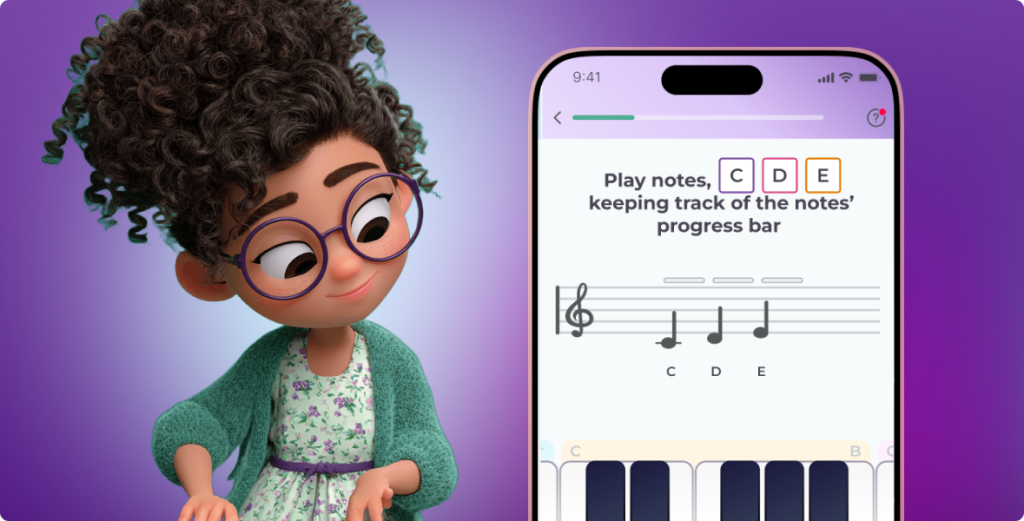
- Visualization and interactivity. Notation, diagrams, video lessons, and game elements make the process of learning not only productive but also fascinating.
- Feedback. Automatic error control and advice permit correcting movements and playing tempo in real time.
- Motivational mechanisms. Systems of rewards, achievements, and progress bars help maintain interest and discipline.
- Accessibility. One can practice anywhere and at a time which is convenient for them, independent of the teacher’s timings.
| Advantage | Description | Benefit for the student |
| Organization and flow | Logical development of ideas and exercises | Elimination of knowledge gaps |
| Personalization | Individual recommendations and exercises | Faster progress |
| Feedback | Real-time error correction | Skills develop faster |
| Motivation | Gamification, achievements | Maintaining interest and regularity |
Thus, applications are great assistants that enable one to turn any boring process of learning music into an interesting journey, at every step of which convenient tools and technical support will accompany the learner. However, let’s analyze further what limitations could be faced by an independent learner when an application is absent. This section highlights app-assisted learning in practice.
Limitations and pitfalls of self-learning
Free choice and independence are great in self-learning of material and appeal to many people. However, behind these advantages hide some difficulties and limitations. The most important of them are:
- Lack of structured approach. In the absence of a clear plan, time is wasted either on less important topics or in seeking additional sources; hence, progress is slowed.
- Motivation problems. The main problem of every self-learner is discipline. It is pretty easy to be sidetracked and to keep putting study time off if there is no outside control.
- Absence of feedback. Without the teacher or community, assessment regarding achievements, recognition of one’s mistakes, or correction in an approach is hard.
- Overload of information. From professional to outdated and even contradictory, different types of quality materials exist online, which may mislead one to confusion and wrong conclusions.
- Limited communication practice. Especially with languages or communication skills, live practice — which is hard to organize without partners or groups — is important.
It is, therefore, a way for self-learners that is highly self-regulatory; it also requires filtering information and may not always be easy for novices or those who require structured support. This perspective underscores the demands on a self-taught path.
Comparative analysis — effectiveness and motivation
Regarding the comparison of apps and self-learning, two main criteria are effectiveness and motivation.
Effectiveness
- Apps: It includes systematic material, with automatic knowledge checks and adaptation to the user level, in steps to avoid gaps in learning.
- Self-learning: Freedom to choose topics and pace, but usually without a clear system; the risk of omitting important aspects and chaotic study is higher.
Motivation
- Apps: Gamification reminds users of the sessions and helps them achieve success through points and achievements, fostering regularity and maintained interest in the apps.
- Self-learner: Completely dependent on inner discipline, which can fluctuate with life events and exhaustion.
Final comparison
| Criteria | App | Self-learning |
| Form | Clear, adaptive | Free, variable |
| Feedback | Instant, automatic | Rare or absent |
| Motivation | Extrinsic — game mechanics | Intrinsic — self-discipline |
| Immersion level | Depends on app design | Depends on personal initiative |
All in all, structured approach and personal motivation complement each other in the best possible outcome. Flexibility of self-learning, however, without systematic supports, the risk for stagnation is higher. An application, in turn, makes it easier and therefore encourages regularity and systematization; sometimes, though, it might constrain creative freedom and depth of engagement with the material. This is a practical method comparison and surfaces educational pros cons clearly.
Talented — an innovative approach between self-learning and applications
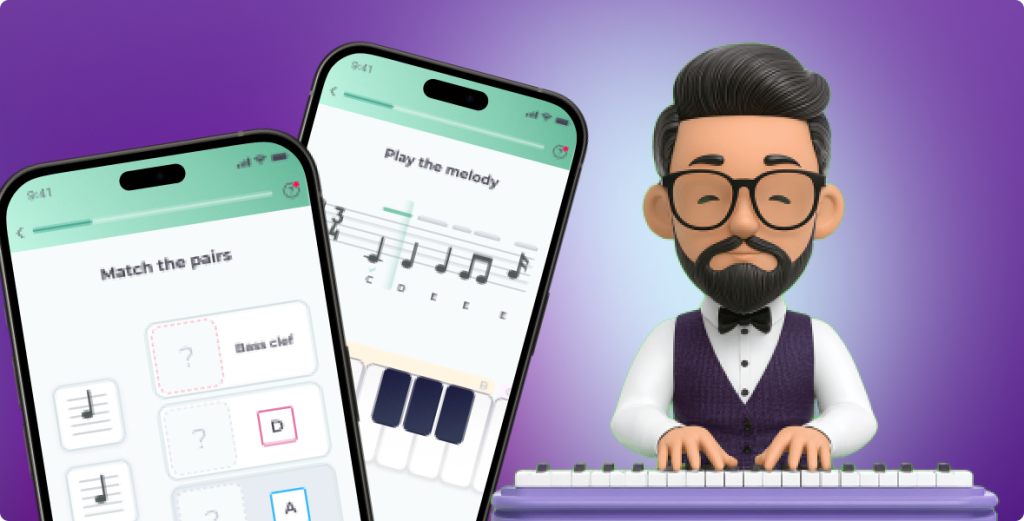
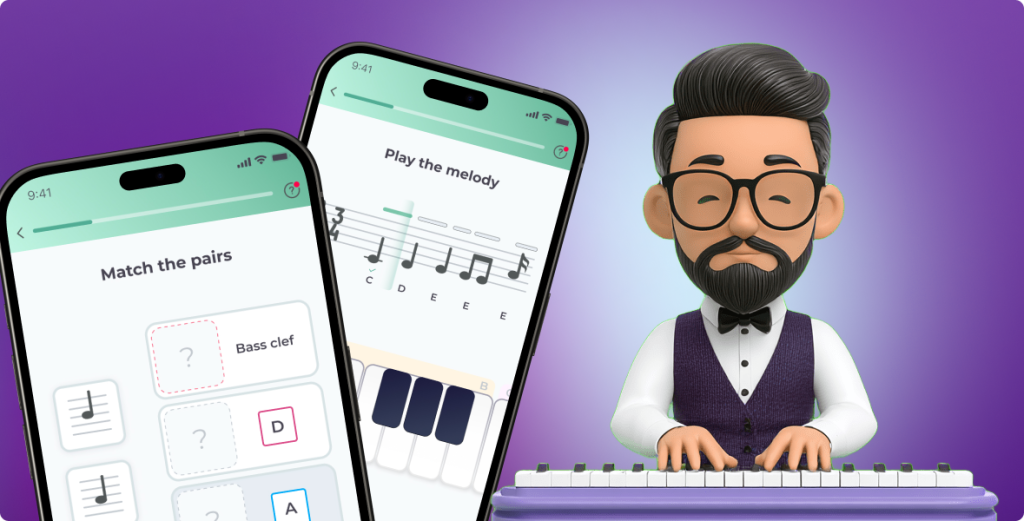
When traditional applications and pure self-study are unsatisfactory, Talented is there: the place where the best of both worlds come together in harmony. More than a learning resource, it’s a hybrid tool designed for those who value structure without losing freedom in pace and choice of learning.
The main features of Talented can be listed as follows:
- Personalized learning process
Unlike applications based on templates, Talented provides adaptive courses tuned to the user’s level and preferences. No need to follow a rigid plan here; recommendations are formed by the platform itself, taking into account progress and feedback. - Interactivity and community support
The problems with self-learning are that they often lead to a lack of motivation and support. Solved by Talented, through an embedded community of like-minded peers and mentors with whom complex points can be discussed and advice received in real time. Deep understanding of material is facilitated by such interaction. - Balance of freedom and structure
The user is free to choose when and how long to study, while Talented keeps the process sufficiently organized for a person not to slip into procrastination — a notorious enemy of self-learning. Optimal tasks are suggested, and focus is maintained by the platform. - Diversification of content formats
Video lessons, interactive tests, exercises for reinforcement — all this is presented in Talented, enabling adjustments to different styles of information perception. Everybody will find a suitable way of learning here, not limited to just one format. - Integration with future goals
It is important not just to study material but to see it as a means of achieving personal life and career goals. Talented offers planning and tracking tools that help to show progress and motivate not to stop at what has been achieved.
Thus, Talented turned out to be a kind of bridge between freedom and direction, personal initiative, and technological support. For those who are tired of chaos in self-study and yet don’t want to accept strict constraints of applications, this is an ideal choice. Such a hybrid approach allows being at the forefront of development in a world where skills quickly become outdated and effectively combines the best learning methods. This is where the Talented app shines.
Choosing the right method for yourself — goals and learning style
One can get lost easily in the diversity of ways to study something new — from classic self-tutorials up to innovative apps. Important it is to choose a strategy that will really work for you, considering several key aspects. Those main guidelines that assist in making an informed choice include the following:
1. Learning goals and objectives
Clearly indicate why you want to master this skill: does it have to do with getting quick practical results or thorough understanding? Apps with ready-made scenarios and interactive exercises are often suitable for short-term goals. If you’re planning deep immersion, self-study allows space for independent analysis and experiments.
2. Information perception style
It is well-suited to visual learners, containing a lot of graphics, videos, and bright interfaces. The advantage here is that apps have interactivity, which contributes a lot to better assimilation. Audio learners and kinesthetic ones can feel more comfortable working with texts and practical tasks, which combine easily during self-study.
3. Motivation level and self-discipline
Procrastination-prone, you might be — apps with built-in motivational systems, reminders, and progress bars all help to keep your attention. Self-study requires inner drive, the ability to set goals, and to control the process without supervision from outside.
4. Time opportunities and limitations
Busy schedules: learning goes down easier in bits and pieces, while the mobile app format allows for fast access to structured lessons. Larger blocks of time available, if are self-exploration of the material may be more fruitful.
5. Feedback and support
High-quality applications provide for built-in feedback or at least expert communication, which serves to accelerate error correction and keeps the interests of students high. It is important in self-study to be able to analyze results independently, which means some experience is needed.
Remember that when choosing, very often the best approach is not either-or. The most effective compromise may be to find a hybrid approach with the mix of interaction with an app and self-learning. One has to become an expert in his process: by listening to himself, adapting tools for himself, not the other way around. Our app was created with exactly this philosophy: to help the user not get lost in the sea of information, to guide him, to structure everything, and give him tools for independent growth. It tracks progress, offers personalized recommendations, and combines tried-and-true algorithms with the flexibility of a personal approach to become that bridge between technology and self-discipline that everyone needs. Don’t be afraid to try and change approaches until you find what really inspires and brings results in the process of learning — that is most important. These recommendations clarify method comparison and educational pros cons across styles.
Conclusion — harmony of technologies and independence in skills development
In the modern world of rapid development of technologies and accessibility of information, the approach to learning has changed radically. The only thing remaining is to understand how both important components are combined — technologies embodied in applications and the value of independence — for the best results in acquiring new skills.
The useful thing is to pay attention to several key aspects to find the optimal balance:
- Diverse sources of knowledge
You expand the horizon of perception, combining structured applications and your own exploration: applications give a clear plan and systematization, and independent study gives flexibility and depth. - Motivation and responsibility
Technologies allow interest to be sustained through gamification and regular reminders, while independence allows internal discipline and time management to be developed. - Individual pace and learning style
Applications follow the rhythm of the user, but independence allows trying out methods that are not very well represented in normal forms. - Flexibility and availability
Putting independent work and applications together allows one to choose time and place, which is so crucial to people who have busy lives.
The result is clear: no one approach is a panacea. Only such personal synergy, where technologies act as a tool of support and structuring and independence is a source of creativity and deep understanding, can bring not only results but also pleasure in learning, which is worth creating. In this respect, a special place is held by the Talented platform, which offers a new format of combining automated learning with the possibility of independent development. Such a hybrid allows choosing every moment the most convenient and effective route. Important to remember when summing up:
- Technologies are helpers, not replacements for humans.
- Self-learning demands the management of time and resources.
- Combination of techniques opens doors towards maximal potential realization.
Thus, the harmonious combination of applications and independence is the key to successful and sustainable skill development in the modern educational space — a synthesis rooted in app-assisted learning and refined by a self-taught mindset through the Talented app.